

A business trip to London finally gave me the chance to visit three places I had wanted to see for years: Bletchley Park, Churchill’s War Rooms and the Imperial War Museum. I expected to learn more about a war I knew from books and family history. I didn’t expect to come away thinking differently about my grandfather (poppy).
Archibald MacLean Hastie served in the Second World War with the New Zealand Divisional Cavalry. His service number was 1139. He fought in Greece and Crete, was wounded on Crete in 1941, returned to the war and eventually came home to New Zealand.
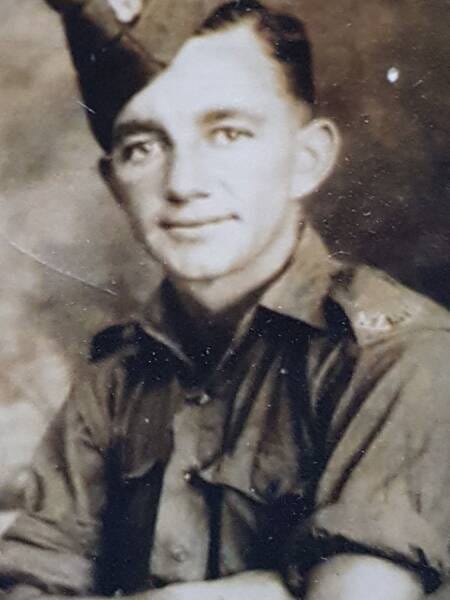
Archibald MacLean Hastie WWII 1139
The nominal roll adds a few details. He was a lorry driver from Dunedin who joined 2 Div Cav and left with the First Echelon. Then, on 11 June 1941, the Auckland Star printed his name in a casualty list under a single heading: WOUNDED. The entry gave his rank, his father’s name and an address. It didn’t say when or where he had been hit. There was nothing about the severity of the wound.
Our family story is less tidy. Poppy had been badly wounded. He crawled away and was found by a mate who refused to leave him. I don’t yet know whether every detail is right. I’ve requested his personnel file from the New Zealand Defence Force and am waiting for it. The file may date the wound and trace his evacuation and return to duty. It won’t tell me what passed between the two men when his mate found him.
I knew him only as Poppy. I was six when he died in 1980. To me, he belonged to a world of medals, toy soldiers, and old photographs. He didn’t say much about the war. Many men of his generation did, but knowing that fills the silence.
Last year I went to Chania with my wife and daughters. At Suda Bay, I stood among the graves and looked towards the sea and mountains. The setting is beautiful, which makes the history harder to hold in your head. I tried to picture a young New Zealander fighting mostly on foot in a country he didn’t know while German troops came down from the sky.
Having my daughters there mattered. They were hearing the family story while I was still trying to make sense of it. Poppy’s war no longer felt like something sealed off in the past. It had reached another generation.
Around that time, I had three service numbers tattooed on my arm: my great-grandfather’s from the First World War, my grandfather’s and my own. My service was modest besides theirs, but the numbers belong to the same family line. I consider the tattoo to be a private roll call. It also provides physical form to something that has occupied much of my professional life: the distance between a number in a system and the person behind it.
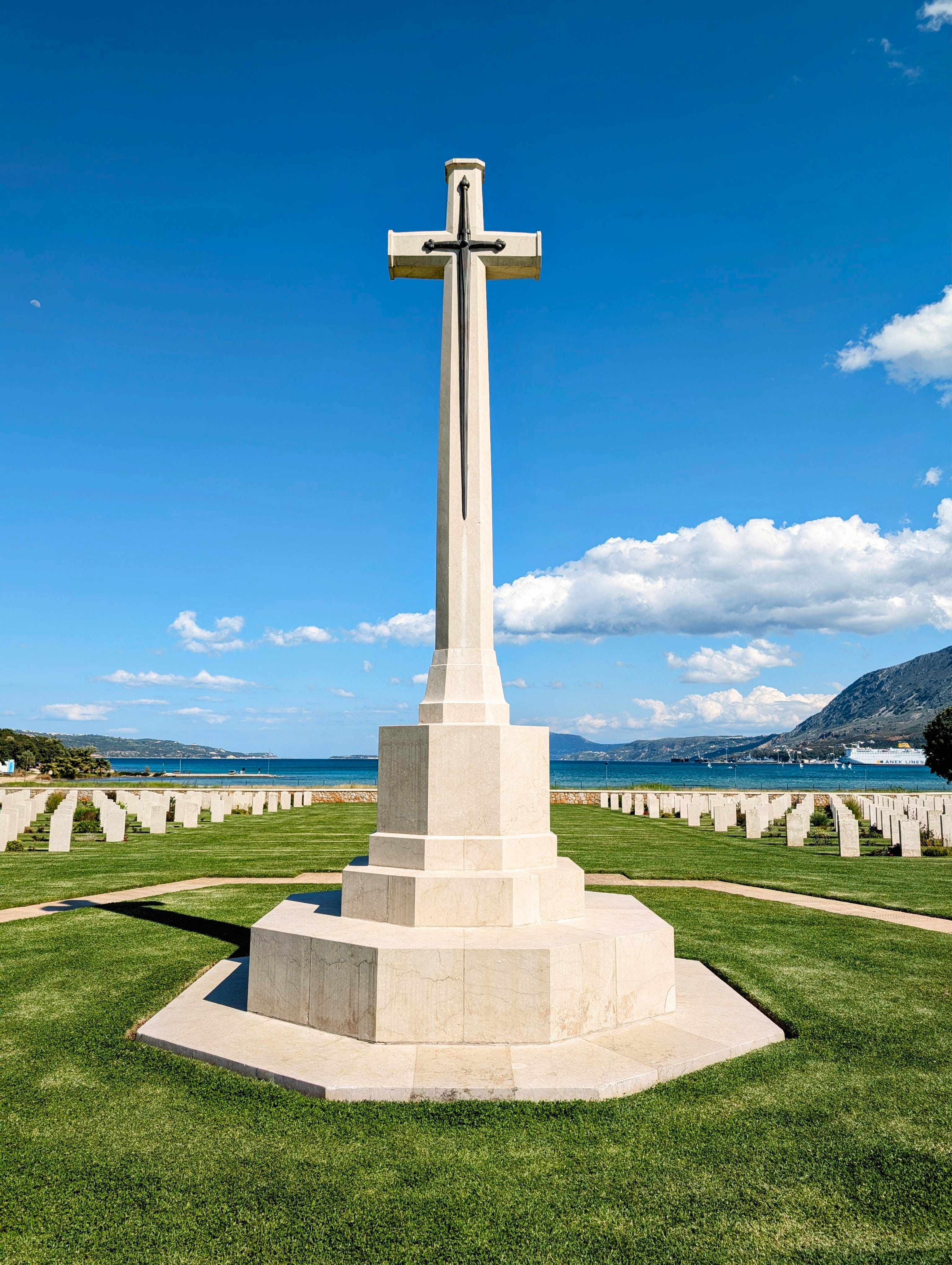
Cross of Sacrifice at Suda Bay, sword inverted, sea and mountains beyond
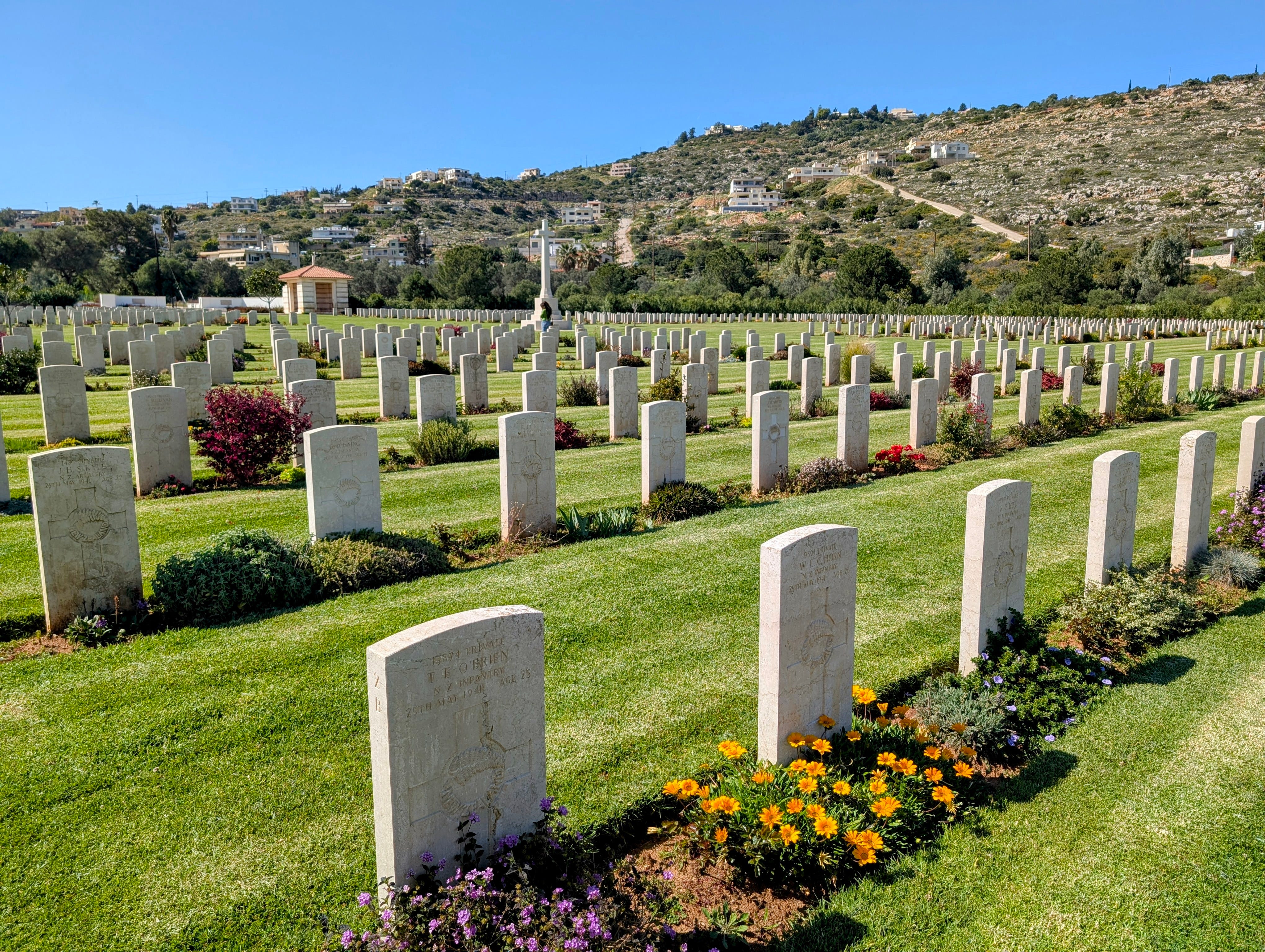
Rows of New Zealand headstones
At Suda Bay, 1139 meant remembrance. In London, it raised a harder question. What occurs between the time intelligence reaches headquarters and when its consequences affect the person on the ground?
What intelligence can do
Bletchley Park is quiet. That was the first thing that struck me. Nothing in its scale or appearance matches the size of its reputation. You find its history in ordinary huts and workaday machinery and in the thousands of people who kept the place running around the clock. Most of them were women. They intercepted and processed enemy communications, including traffic encrypted using Enigma.
The intelligence known as Ultra gave the Allies an extraordinary advantage. It also created a problem. The Allies could not allow the Germans to discover that they were intercepting their communications. The Allies had to ensure that the Germans remained unaware of the interception of their communications. Information had to remain tightly controlled. A commander might receive a warning without knowing its source. If the Allies acted on a decrypted message, they sometimes needed another explanation for the action.
This was intelligence at its most valuable, and it still left room for uncertainty and error. More information didn’t relieve anyone of the need to make a judgement.
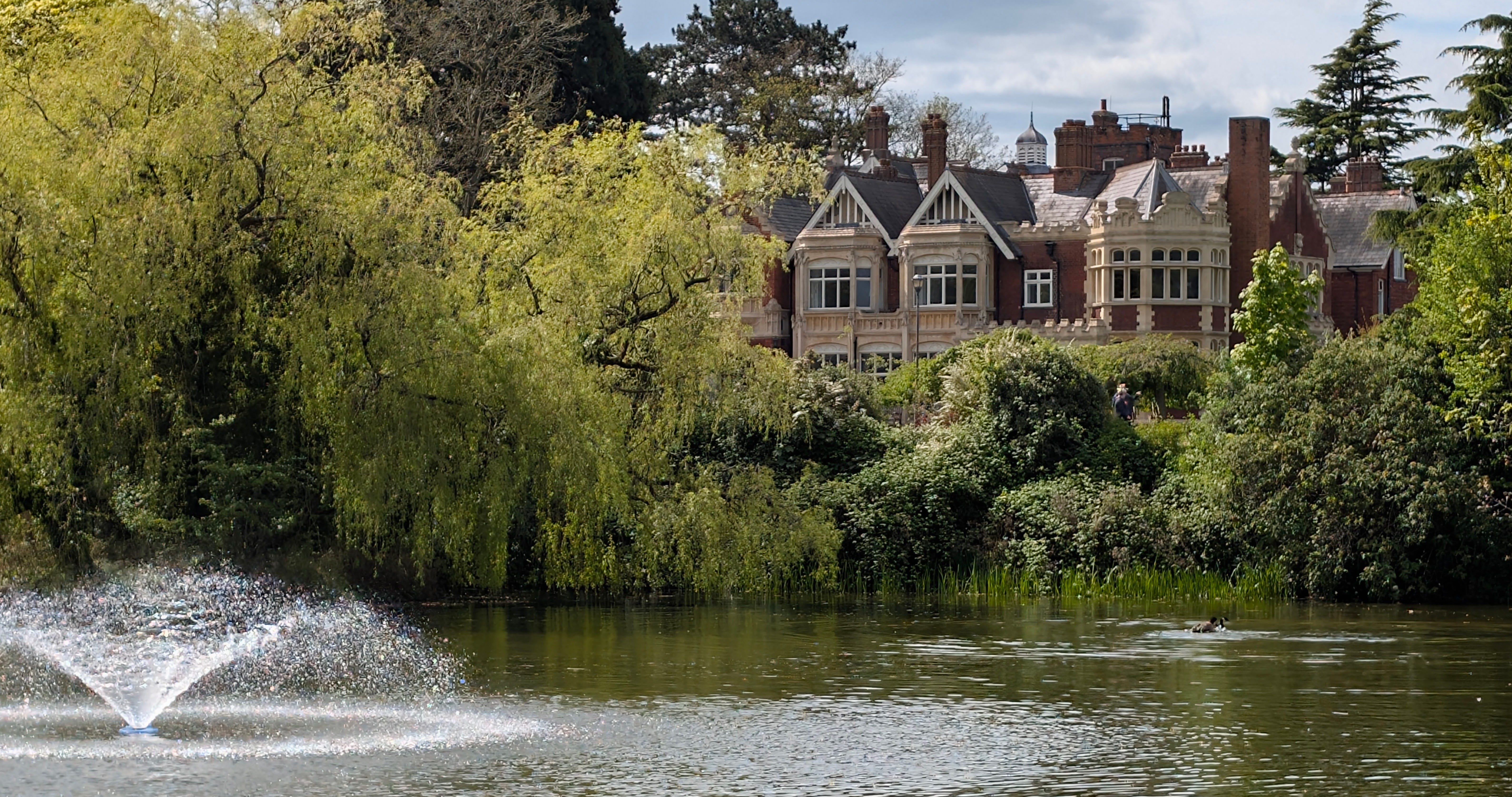
Bletchley Park mansion, spring light, lake in foreground
That became personal for me in Churchill’s War Rooms. What struck me underground was how cramped the rooms were. Maps and files turned a vast war into something that could be organised in a small space. An army became a marker; a place became an objective. The people who would carry out the decision were somewhere beyond the walls.
I visited on Anzac Day. One display asked whether Churchill knew that Hitler planned to take Crete. British leaders had a warning from decrypted German communications. Major-General Bernard Freyberg, who commanded the island’s defence, also received intelligence about the coming attack, which was most likely to involve paratroopers rather than an amphibious assault. This intelligence mattered, as Freyberg had prepared his troops for a sea-born assault by the Germans; however, his men were ill-positioned to defend against the Fallschirmjäger (German paratroopers). Acting on this intelligence and repositioning the troops would have most likely signalled to the Germans that their communications were being read, and yet none of this knowledge produced a successful defence.
The Allied troops on the island included men who had escaped from Greece (my grandfather was one of them) exhausted and without much of their equipment. They had almost no air cover. Tanks were scarce and communications poor. Freyberg placed too much weight on the danger of an attack from the sea, and he did not adequately protect Maleme airfield against the airborne threat. Once the Germans secured the airfield, they could fly in reinforcements. The defence began to break down.
Ultra couldn’t provide aircraft or repair a broken chain of command. It couldn’t correct every assumption. Its source also had to remain secret. The intelligence warned of the attack, but it did not solve the practical problem of defending Crete.
By 19 May, the Div Cav personnel on the island had been formed into the Russell Force. These were armoured reconnaissance soldiers who had lost most of their vehicles in Greece. On Crete they fought as makeshift infantry around Aghya and Galatas. The regimental history records men digging into exposed ground with steel helmets, bayonets, tins, and occasionally their hands.
During the battle, the enemy wounded four officers and 36 other ranks from the regiment. Poppy was one of those 36.
He knew nothing of Ultra. He saw German paratroopers and a defensive position giving way around him. The newspaper record ends with the word “wounded”. Our family story starts there, with another soldier deciding that he wasn’t going to leave Poppy behind.
I’m not accusing Churchill, Freyberg, or the people working below Whitehall of carelessness. They were making decisions in an existential war with too few resources and no painless options. It is all too simple to be certain when you carry none of the responsibility.
Still, necessity doesn’t make the cost abstract. A decision can make sense at headquarters and be disastrous for the man who receives it in the field. Intelligence may save many lives across a campaign without saving the man in front of you. At headquarters, casualties appear in totals. A wound is never a total for the man who suffers it.
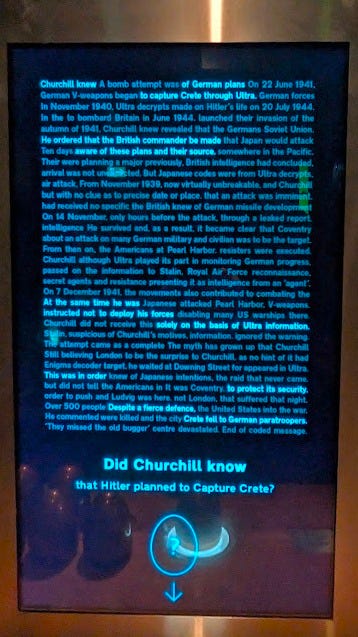
Churchill War Rooms: image of the question on did Churchill know about Hitlers plans to capture Crete?
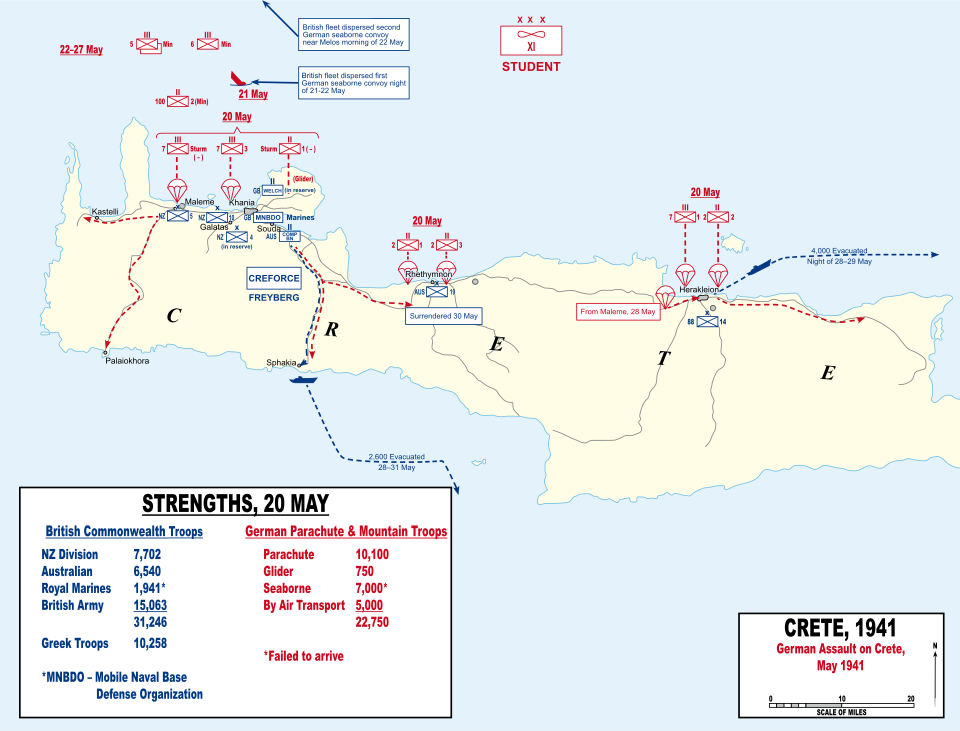
A map of Operation Merkur, the German airborne invasion of Crete in May 1941.
What came home
The Imperial War Museum brought me back to the lives behind those numbers. You can spend only so long looking at maps and cabinet papers before the war becomes small again. A hillside. A hospital. A telegram delivered to a family.
My great-grandfather carried one war home and my grandfather another. Neither turned his experience into a story for later generations. Mid-century New Zealand gave men little encouragement to talk about what war had done to them. Families adjusted to what wasn’t said.
The burden didn’t end with the men who served. My grandmother lived with whatever Poppy couldn’t explain. His personnel file may describe the wound and trace his subsequent movements. It won’t tell me whether the war changed the way he slept or affected their marriage. It certainly will record what she learned to avoid asking. Military records follow the serviceman. They rarely show what his family had to absorb when he came home.
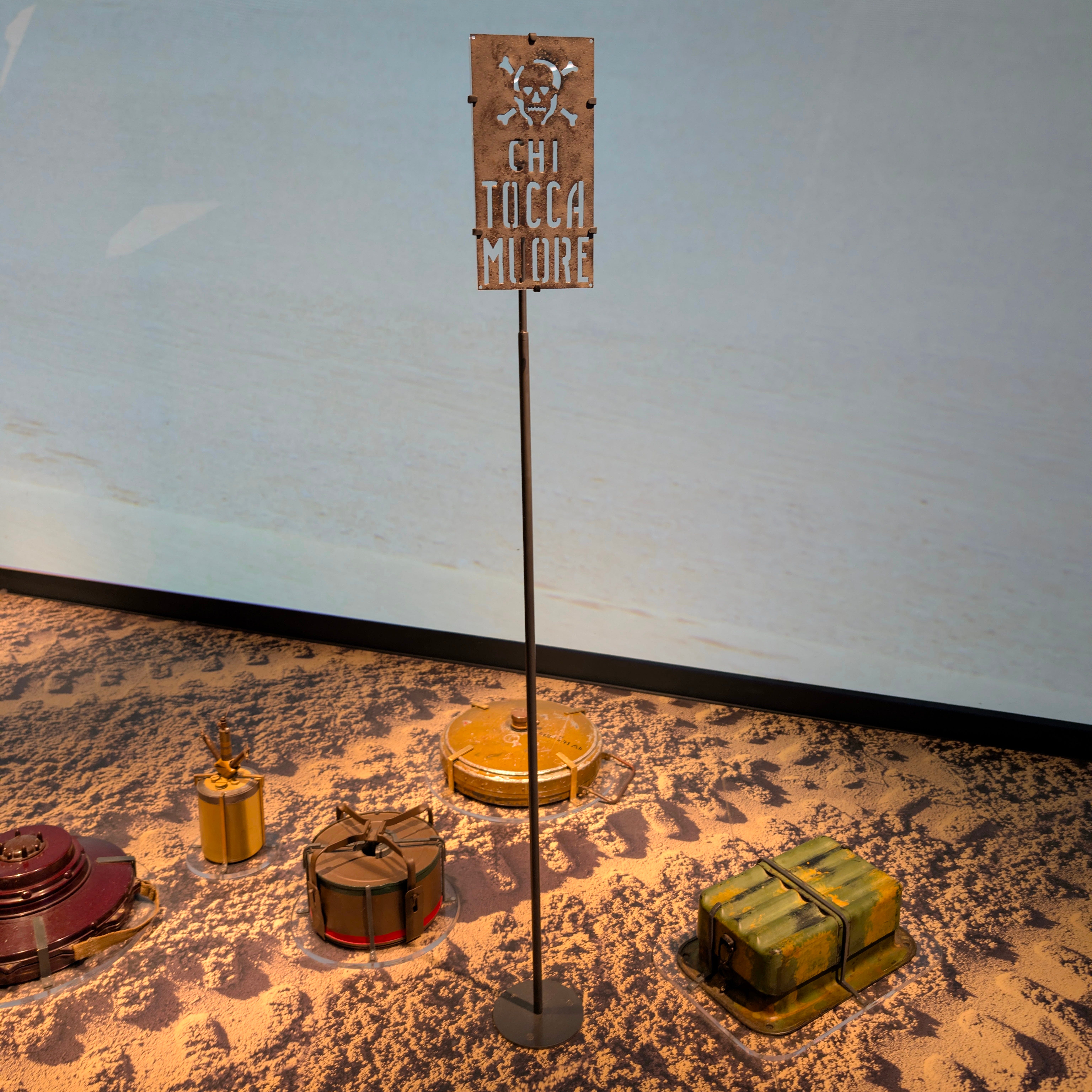
An Italian minefield warning sign read, “Chi tocca muore”: whoever touches it dies.
One object at the museum has stayed with me. It was an Italian minefield sign carrying the words Chi tocca muore: whoever touches it dies. The warning was literal. It also reminded me of the way some families live around painful memories. They know where the dangerous ground lies, even if nobody has marked its exact boundary.
Those visits followed me back into my work in intelligence, security, and risk. Our profession has a deep appetite for visibility. We ask for more telemetry and earlier warnings. Most of the time, more knowledge is useful. But I have seen enough risk reports reach senior tables to know that visibility can create its own false comfort. Seeing a problem is not the same as having the authority or money to deal with it. The appetite may be missing too.
Crete is a particularly severe example of this problem. Institutions interpret intelligence through their existing assumptions and the resources they have available. Leaders choose, and then the consequences travel downwards. The person who lives with the result may never know what information shaped it.
A board can receive a detailed account of a risk and still lack the capacity to respond. A security team can identify a dangerous dependency but may be instructed to tolerate it. A warning can be accurate and timely, yet achieve nothing because nobody has decided what the organisation is willing to spend or give up.
So I no longer judge an intelligence system by how much it collects. I want to know whether the information changed a decision while there was still time and whether the decision-makers understood who would carry the cost.
I still don’t know exactly what happened to Poppy on Crete. His personnel file may add some detail when it arrives, but I doubt it will settle the family story. What I know is enough for now. He went to war and was wounded. Another man helped him survive. He came home with experiences he mostly kept to himself.
The three numbers on my arm once seemed to connect the generations in a simple line. They don’t feel simple now. Each one links a person to a military system while showing how little that system can record. Behind 1139 was Poppy. Besides him was a friend who chose to help, and the events that followed were brought home by Poppy.
That is what I brought home from London. Intelligence matters. So does the distance between what an institution knows and what it can actually do. At the far end of every intelligence picture, someone lives with the difference.